The Competitor You're Not Watching Is Inside Your Own Head

Let me say something that's going to sound counterintuitive coming from a startup site: working harder is not always the same as building smarter. And somewhere between the glorification of 4 a.m. grind sessions and the LinkedIn posts about "embracing the chaos," a lot of founders are burning through their most critical asset without even realizing it.
That asset is you. Your judgment. Your creativity. Your capacity to make good decisions under pressure.
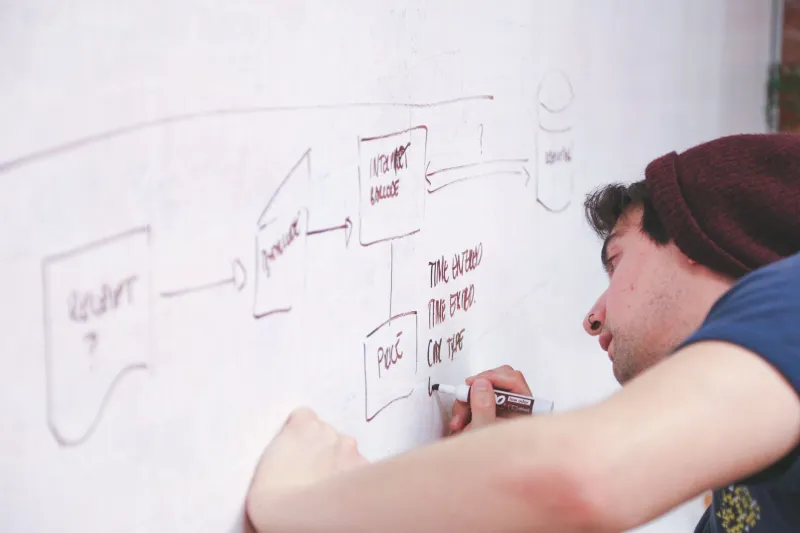
Burnout doesn't announce itself with a dramatic collapse. It's not a scene in a movie where the founder stares blankly at a whiteboard and realizes they've lost the plot. It's quieter than that. It's slower. And by the time most founders recognize it, it's already been degrading their work for months.
This is an opinion piece. I'm not going to pretend otherwise. But I think the startup community has a serious blind spot here, and it's costing founders—and their companies—more than any competitor ever could.
The Culture That Made This Normal
We built an entrepreneurial mythology in this country that treats exhaustion as a credential. Sleep deprivation gets name-dropped in founder origin stories like a badge of honor. "I was working 80-hour weeks" is said with pride, as if the suffering is what made the success meaningful.
Silicon Valley didn't invent this, but it perfected the marketing of it. And now it's everywhere—in the podcasts, in the Twitter threads, in the investor pitch culture that rewards founders who seem relentlessly driven above all else.
Here's the thing nobody talks about: most of the founders who survived those brutal early periods succeeded despite the unsustainable pace, not because of it. They got lucky with timing. They had co-founders who picked up slack. They eventually crashed, recalibrated, and built something more sustainable before it mattered.
The ones who didn't survive? You mostly don't hear their stories.
What Burnout Actually Does to Your Business
This isn't about wellness in the abstract. This is about your company's performance.
When you're running on empty, here's what actually happens:
Your decision quality tanks. Research on cognitive fatigue is pretty clear—sleep-deprived, chronically stressed people make worse decisions, especially under uncertainty. Founders make high-stakes calls constantly. You cannot afford to make them with a degraded processor.
You stop seeing around corners. Creativity and strategic thinking require a kind of mental spaciousness that exhaustion destroys. The best ideas—the pivots that save companies, the positioning shifts that unlock growth—tend to emerge when your brain has room to breathe. Burnout fills every available mental space with noise.
Your team feels it. You think you're hiding it. You're not. Burned-out founders become unpredictable, short-tempered, or emotionally flat—sometimes all three in the same week. That energy moves through a team fast, especially a small one. If you're the culture, and you're broken, the culture is broken.
You start playing defense. One of the subtler signs of burnout is that founders shift from building toward protecting. They stop taking smart risks. They get reactive instead of proactive. They mistake treading water for stability.
Running on Fumes vs. Running on Adrenaline
This is the distinction most founders miss, because both states feel like high gear.
Adrenaline-driven momentum has a quality to it—you're energized, you're generating ideas, you're moving fast but still feel in control. You're excited about what you're building. Hard days happen, but recovery is quick.
Fumes-driven momentum feels similar on the surface, but look closer: you're reactive rather than proactive. You're irritable at small things. You're not generating new ideas—you're executing on autopilot. Your excitement has been replaced by a kind of grim determination. You tell yourself you'll rest "after the launch" or "after the raise" or "after Q1." The finish line keeps moving.
Here's a quick gut-check. Ask yourself honestly:
- When did you last have a genuinely good idea that excited you?
- When did you last make a decision you felt fully confident in?
- When did you last wake up and feel ready—not just functional?
If you're struggling to remember, that's information worth taking seriously.
Building Rhythms That Actually Work
I'm not going to tell you to meditate and take Sundays off. You'll either already do that or you'll roll your eyes and stop reading. Instead, let's talk systems.
Protect one decision-free window per week. Not a vacation. Not a day off. Just two to three hours where you're not in reactive mode—no Slack, no email, no meetings. Use it to think, to read, to walk, to do whatever helps you process. Founders who do this consistently report better strategic clarity, not less productivity.
Build a "warning list" with someone you trust. Give a co-founder, a mentor, or even a close friend a short list of your personal burnout signals—the specific behaviors that show up when you're running low. Ask them to tell you when they see it. You won't always see it yourself.
Audit your calendar for energy, not just time. Some tasks drain you; some restore you. A meeting-heavy week where every slot is reactive is not the same as a week where you have protected time to build. Same number of hours, very different outcomes.
Normalize the debrief. After big pushes—launches, fundraising rounds, product sprints—build in a deliberate wind-down period. Not because you've earned a break, but because the recovery is part of the performance cycle. Athletes know this. Founders mostly don't act like it.
The Real Competitive Advantage
Here's my actual take: the founders who build something lasting aren't the ones who outworked everyone. They're the ones who stayed sharp long enough to outthink everyone. That requires being honest about your own limits—not as a weakness, but as a strategic variable.
Your startup has a lot of competitors. The one you're least likely to see coming is the version of yourself that ran out of gas six months ago and kept going anyway.
Don't let burnout be the thing that takes you out. You've worked too hard to lose to yourself.